Course Summary
Bipolar disorder is a complex mental health condition characterized by significant shifts in mood, energy, activity levels, and daily concentration. This interactive, 1-day Level 3 course provides social care practitioners, residential care staff, supported living teams, and foster carers with the practical knowledge and confidence needed to deliver compassionate, safe, and effective person-centred support to individuals navigating bipolar disorder across various care settings.
Through realistic social care case studies and grounded discussion, learners explore how human mood regulation functions, how bipolar disorder differs from unipolar depression, and how factors such as trauma, severe stress, and routine disruption affect long-term mood stability. The course examines the distinct characteristics of Bipolar I, Bipolar II, and cyclothymia, equipping your team to recognize early warning signs, support individuals during manic or depressive episodes, and implement proactive relapse prevention strategies.
Key Definitions in Bipolar Care
To help care professionals interpret multi-agency reports, contribute to statutory care plans, and communicate effectively with NHS mental health services, this course covers several core clinical and behavioural terms:
- Hypomania
- A mild-to-moderate form of mania characterized by elevated mood, heightened energy, and a decreased need for sleep. While it does not include psychotic features or require emergency hospitalization like full mania, it significantly alters an individual's baseline behavior, impulsivity, and decision-making capacity.
- Mixed Episode (Mixed Features)
- A high-risk state where symptoms of mania or hypomania and depression occur simultaneously or in rapid succession—such as intense physical agitation and racing thoughts combined with severe despair or suicidal ideation—requiring close monitoring and tailored support strategies.
- Social Rhythm Therapy (SRT) Framework
- An evidence-based behavioral approach focused on establishing and maintaining strict daily routines—including sleep-wake patterns, regular mealtimes, and social contact—to stabilize the biological circadian clock, which is uniquely sensitive to disruption in individuals with bipolar disorder.
By completing this training course, care staff and foster carers will feel confident recognizing early relapse indicators, managing complex behavioral presentations, collaborating seamlessly with crisis resolution teams, and advocating for dignity, safety, and social inclusion in everyday practice.
Course Learning Outcomes
Review the learning objectives below. Expand each aim to view the detailed criteria this course covers.
- 1.1Describe what bipolar disorder is.
- 1.2Describe and compare the difference between bipolar disorder and depression.
- 1.3Explain and evaluate other mental health challenges associated with bipolar disorder (e.g., anxiety, trauma, ADHD).
- 1.4Explain facts and myths about bipolar disorder.
- 1.5Describe how mood regulation works and how bipolar disorder affects mood cycles.
- 1.6Explain how stigma, misunderstanding and language influence how bipolar disorder is perceived.
- 2.1Explain and evaluate the different types of bipolar disorder (e.g., Bipolar I, Bipolar II, cyclothymia).
- 2.2Explain the difference between and meaning of mania, hypomania and manic episodes.
- 2.3Describe how depressive, manic and mixed episodes may present.
- 2.4Explain how bipolar disorder can affect sleep, energy, motivation, behaviour and decision‐making.
- 2.5Analyse how co‐occurring conditions (e.g., substance use, trauma, anxiety) may influence presentation.
- 2.6Describe how bipolar disorder may present differently in young people, adults and older adults.
- 3.1Analyse possible influences on the development or presentation of bipolar disorder (biological, psychological, social).
- 3.2Describe possible indicators of bipolar disorder.
- 3.3Explain early warning signs, triggers and relapse indicators.
- 3.4Describe the effect bipolar disorder can have on the person, family, friends and support teams.
- 3.5Explain how bipolar disorder can impact relationships, employment, education and daily functioning.
- 3.6Analyse how stress, trauma, sleep disruption and environmental factors influence mood stability.
- 4.1Explain and evaluate ways of providing support and signposting for people with bipolar disorder.
- 4.2Describe how to support someone during depressive, manic or mixed episodes.
- 4.3Explain the importance of routine, sleep hygiene, structure and emotional regulation strategies.
- 4.4Describe how to work collaboratively with mental health services, crisis teams and multi‐agency partners.
- 4.5Explain how to promote safety, wellbeing and relapse prevention.
- 4.6Describe how to use trauma‐informed, strengths‐based and person‐centred approaches.
- 4.7Identify sources of further information, guidance and specialist support.
- 4.8Explain how to challenge stigma and promote dignity, respect and inclusion.
Who is this course for?
This Bipolar Disorder training course is designed for adult and children’s social care workers, residential care staff, support workers, personal assistants, and foster carers looking to build a robust, Level 3 understanding of bipolar disorder and practical support strategies.
Duration
1 day course - we can be flexible on start and finish times to suit your needs such as school run friendly times or twilight sessions.
Availability
This Bipolar Disorder course is offered in two delivery formats:
- Remote Online: Led by a live tutor via Zoom or Microsoft Teams, allowing participants to join remotely. (Also known as virtual classroom training)
- Face-to-Face: Delivered in person at your location or a venue you arrange. (Also referred to as on-site training)
View a comparison of Remote and in-person face to face training .
Complete our quick enquiry form for a price and available dates.
Certification
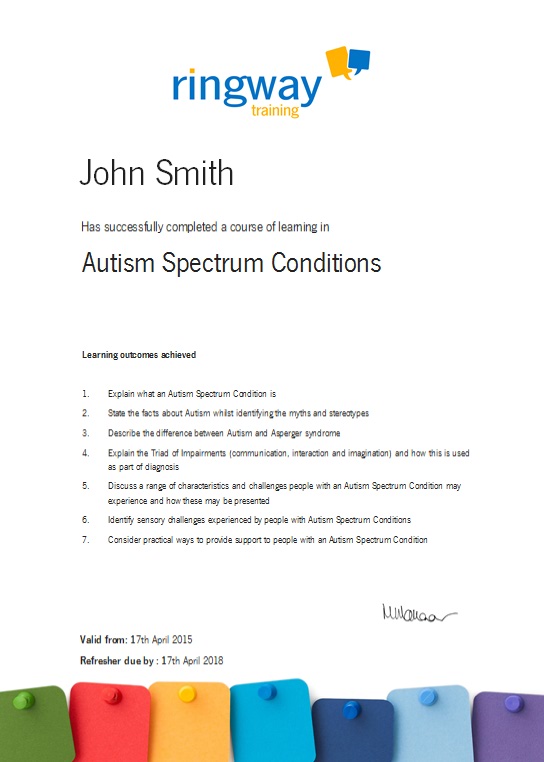
Each learner completing this course will receive a digital (PDF) certificate of learning.
Accreditation
The course contents are accredited by the Open College Network (OCN) Credit4Learning as a Level 3 course.
Choose the learning environment that works best for you: our expert-led training is offered in two convenient formats - remote tutor led online or in person face to face.
Flexible start and finish times to suit you. Contact us for available dates.
The course contents are accredited by the Open College Network (OCN) Credit4Learning as a Level 3 course.
Get a Price or more information...
Drop us a few details and we’ll send over an all-inclusive price.Just so you know, there’s no sales team here waiting and we won't add you to any marketing lists. You’ll get a quick direct reply from one of us.
Clear pricing
We ask for location (for face to face training) and approximate numbers because we include any expenses in the quotes we give so you get one clear price - no surprise added extras
More Information?
Want to dig into the details first or interested in a number of courses? No problem! Drop us a message or phone us.
Contact UsCourse FAQs