Course Summary
When a child lives around domestic violence, the impact doesn't stop when the shouting ends. This one-day, Level 3 training course is designed specifically for foster carers and social care professionals who support children and young people dealing with the aftermath of domestic abuse. Instead of heavy academic jargon, we focus on real-world, practical guidance that helps you make a difference in a child’s day-to-day life.
Throughout the day, we will unpack how domestic abuse presents, looking closely at tactics like coercive control, isolation, and honour-based abuse. You will learn to look at a child’s challenging or sexualised behaviour through a trauma-informed lens, understanding how Adverse Childhood Experiences (ACEs) and cumulative harm affect their coping mechanisms. We also tackle the complex, practical side of care—including navigating the emotional fallout of supervised contact visits, working effectively with multi-agency safeguarding teams, and knowing when to bring in specialist therapeutic support.
Understanding Key Domestic Abuse and Trauma Terms
To help professionals provide the best care and accurately record safeguarding concerns, it is vital to understand these three core concepts:
- Coercive Control
- A pattern of acts including acts of assault, threats, humiliation, and intimidation used by a perpetrator to harm, punish, or frighten their victim, stripping away their independence and isolating them from support networks.
- Trauma-Bonding
- A complex emotional attachment that develops between a person and their abuser, built on alternating cycles of abuse and affection, which explains why leaving an abusive environment is incredibly difficult for both adults and children.
- Co-Regulation
- A trauma-informed practice where a calm, grounded adult uses their own presence, tone of voice, and body language to help a highly stressed or traumatised child manage their emotions and return to a state of safety.
By the end of this course, you will be equipped with strengths-based, person-led approaches like empathetic listening and sensory-aware support. You will know how to create predictable, structured routines that prevent re-traumatisation, ensuring the children in your care feel secure, understood, and empowered to build resilience.
Course Learning Outcomes
Review the learning objectives below. Expand each aim to view the detailed criteria this course covers.
- 1.1Describe the meaning of domestic violence and domestic abuse
- 1.2Explain actions and behaviours that constitute domestic abuse, including coercive control, intimidation, isolation, and financial abuse.
- 1.3Analyse how Honour‐Based Abuse links into domestic violence.
- 1.4Identify UK legislation and statutory guidance that protects children, young people, and adults from domestic abuse.
- 1.5Explain how domestic violence intersects with protected characteristics and how this may influence risk and vulnerability.
- 1.6Describe common characteristics and behavioural patterns associated with perpetrators of domestic abuse.
- 1.7Explain why it can be difficult for a target of domestic abuse to leave the home, including trauma‐bonding, fear, coercion, and practical barriers.
- 1.8Describe the meaning of re‐experiencing and how this may present in children and young people.
- 2.1Explain and evaluate the immediate emotional, psychological, behavioural, and physical impact of domestic violence on children and young people.
- 2.2Explain and evaluate the long‐term impact, including trauma, developmental delay, relational difficulties, and mental health needs.
- 2.3Describe how domestic abuse and violence links with attachment, mental health, and resilience.
- 2.4Explain how Adverse Childhood Experiences (ACEs) and cumulative harm influence a child’s understanding, behaviour, and coping strategies.
- 2.5Analyse how neurodivergent children and young people may experience, interpret, or express trauma differently.
- 2.6Explain how domestic abuse impacts wider family members, siblings, carers, and professional support teams.
- 2.7Describe how children and young people may feel after being removed from the home environment for safety.
- 2.8Explain why some young people may present concerning or sexualised behaviour following exposure to domestic abuse and violence.
- 3.1Describe how contact with perpetrators or family members can impact children and young people.
- 3.2Evaluate the potential risks and benefits of supervised contact visits.
- 3.3Explain considerations when supervising contact, including emotional safety, boundaries, and trauma‐informed communication.
- 3.4Consider support requirements when a child or young person returns from contact.
- 3.5Describe safe working practices relating to physical contact, allegations, and absconding.
- 3.6Explain how professional curiosity, reflective practice, and accurate recording contribute to safeguarding.
- 3.7Describe the role of multi‐agency working, information‐sharing, and escalation procedures when domestic violence is suspected or disclosed.
- 3.8Explain how consistency, structure, and predictable routines support emotional regulation
- 3.9Define the meaning of later life letters and how they relate to historical domestic abuse, violence and trauma.
- 4.1Describe the meaning of empathetic listening and how it supports children and young people.
- 4.2Explain different ways of providing therapeutic and emotional support.
- 4.3Describe trauma‐informed approaches including co‐regulation, grounding, emotional containment, and sensory‐aware support.
- 4.4Explain how to create psychologically safe, predictable environments that reduce re‐traumatisation.
- 4.5Describe strengths‐based, person‐led approaches that promote empowerment and resilience.
- 4.6Explain how reflective practice supports professional wellbeing and improves outcomes for children and young people.
- 4.7Identify when to seek specialist therapeutic input and how to signpost appropriately.
Who is this course for?
This domestic abuse training is tailor-made for foster carers, residential support workers, and social care professionals who care for children and young people. It is ideal for anyone working at a UK Level 3 standard who needs practical, trauma-informed strategies to manage the day-to-day realities of domestic abuse recovery.
Duration
1 day course - we can be flexible on start and finish times to suit your needs such as school run friendly times or twilight sessions.
Availability
This Domestic Violence Training Course is offered in two delivery formats:
- Remote Online: Led by a live tutor via Zoom or Microsoft Teams, allowing participants to join remotely. (Also known as virtual classroom training)
- Face-to-Face: Delivered in person at your location or a venue you arrange. (Also referred to as on-site training)
View a comparison of Remote and in-person face to face training .
Complete our quick enquiry form for a price and available dates.
Certification
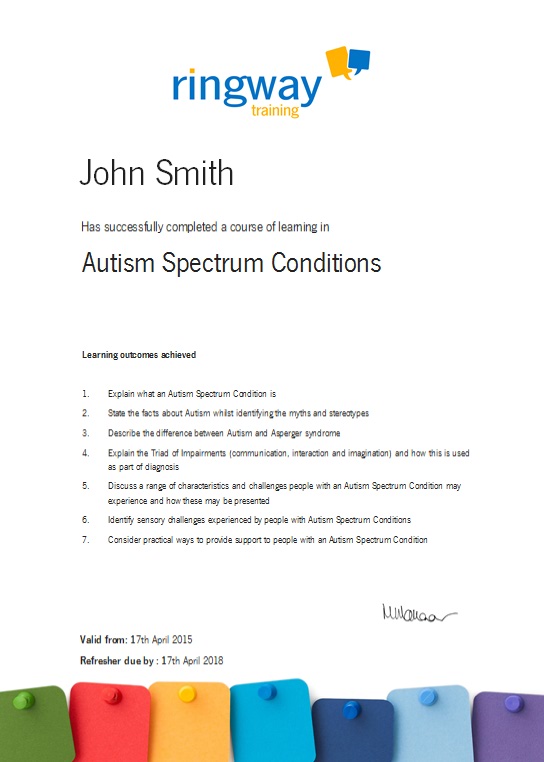
Each learner completing this course will receive a digital (PDF) certificate of learning.
Accreditation
The course contents are accredited by the Open College Network (OCN) Credit4Learning as a Level 3 course.
Choose the learning environment that works best for you: our expert-led training is offered in two convenient formats - remote tutor led online or in person face to face.
Flexible start and finish times to suit you. Contact us for available dates.
The course contents are accredited by the Open College Network (OCN) Credit4Learning as a Level 3 course.
Get a Price or more information...
Drop us a few details and we’ll send over an all-inclusive price.Just so you know, there’s no sales team here waiting and we won't add you to any marketing lists. You’ll get a quick direct reply from one of us.
Clear pricing
We ask for location (for face to face training) and approximate numbers because we include any expenses in the quotes we give so you get one clear price - no surprise added extras
More Information?
Want to dig into the details first or interested in a number of courses? No problem! Drop us a message or phone us.
Contact UsCourse FAQs