Course Summary
Navigating modern boyhood can be complex. Today's young males face conflicting cultural messages, rising isolation, and a growing disconnect regarding their role in society, often leading to defensive behaviors, emotional masking, or aggression.
This evidence-informed, one-day Level 3 course provides real-world strategies for social workers, foster carers, and residential staff. You will explore how trauma, neurodiversity, and social expectations intersect to shape masculine identity, equipping you to respond with confidence and empathy.
Advanced Concepts in Modern Masculinity: Hegemonic, Toxic, and Healthy Masculinity
Understanding youth behavior requires looking beyond standard definitions of gender roles. In professional social care, it is vital to distinguish between specific theoretical frameworks that influence boys:
- Hegemonic Masculinity
- Rooted in R.W. Connell's sociological framework, this represents a socially idealized, dominant form of masculinity that implicitly legitimizes the global subordination of women and marginalized males, often centering on authority, physical toughness, and emotional stoicism.
- Toxic Masculinity
- A narrower subset of hegemonic norms where self-reliance, emotional suppression, and dominance are enforced through social policing, directly translating into risk-taking, relational aggression, and an inability to process vulnerability safely.
- Healthy/Positive Masculinity
- A framework that decouples strength and resilience from emotional detachment, fostering accountability, emotional literacy, empathy, and community contribution.
Key Areas Covered in the Course
- Identity & Development: Understanding how social scripts, trauma, and attachment shape masculine behavior and emotional suppression.
- Trauma-Informed Practice: Recognizing the root causes behind risk-taking, bravado, withdrawal, and conflict responses.
- Relational Tools: Practical strategies for co-regulation, building trust, and fostering safe emotional literacy.
- Challenging Harmful Norms: How to address toxic influences and rigid gender expectations without shaming or alienating young people.
By the end of the day, practitioners will possess actionable techniques to improve engagement, de-escalate tension, and foster positive, resilient identity development in the boys and teens they support.
Course Learning Outcomes
Review the learning objectives below. Expand each aim to view the detailed criteria this course covers.
- 1.1Describe how masculinity develops across childhood, adolescence and early adulthood, including the influence of attachment, trauma, culture and social learning.
- 1.2Explain the difference between traditional, hegemonic, toxic and healthy masculinity.
- 1.3Identify how gender norms, expectations and social scripts shape identity, behaviour and emotional expression.
- 1.4Analyse how neurodiversity, sensory processing differences and communication styles influence experiences of masculinity and identity.
- 1.5Summarise how belonging, status, peer approval and social hierarchies contribute to identity formation.
- 1.6Explain how boys and young men internalise messages about strength, vulnerability, independence and emotional expression.
- 2.1Describe common behavioural presentations linked to masculinity, including risk‐taking, bravado, withdrawal, masking, dominance, avoidance and emotional suppression.
- 2.2Identify how shame, fear of judgement and vulnerability avoidance shape behaviour in boys and young men.
- 2.3Explain how masculinity influences conflict responses, including aggression, posturing, boundary‐testing and peer‐reinforced behaviour.
- 2.4Analyse how trauma, adversity and unmet needs interact with masculine identity to influence behaviour.
- 2.5Recognise how masculinity impacts communication styles, including indirect communication, humour, deflection, silence and non‐verbal cues.
- 2.6Distinguish between behaviour driven by identity needs, trauma responses, neurodivergent communication and emotional distress.
- 3.1Explain trauma‐informed, strengths‐based and neurodiversity‐affirming principles in relation to masculinity and identity.
- 3.2Describe strategies for building relational safety, trust and connection with boys and young men.
- 3.3Identify approaches that support emotional literacy, emotional regulation and safe expression of vulnerability.
- 3.4Summarise co‐regulation, attunement and pacing techniques that reduce escalation and support relational engagement.
- 3.5Explain how to challenge harmful masculine norms without shaming, pathologising or undermining identity.
- 3.6Analyse how positive role modelling, mentoring and consistent boundaries support healthy identity development.
- 3.7Describe restorative and relational repair approaches that rebuild trust following conflict or rupture.
- 4.1Explain how cultural, societal and community influences shape masculine identity and behaviour.
- 4.2Describe how organisational culture, policies and behaviour management systems can reinforce or challenge harmful masculine norms.
- 4.3Identify strategies for embedding gender‐aware, shame‐aware and trauma‐informed practice across teams.
- 4.4Summarise ethical, safeguarding and professional boundaries considerations when supporting boys and young men.
- 4.5Analyse how multi‐agency working, information‐sharing and partnership approaches support effective intervention.
- 4.6Explain how reflective practice, supervision and staff self‐awareness influence relational engagement and reduce gender‐based harm.
- 4.7Describe how staff wellbeing, emotional regulation and professional modelling impact boys’ and young men’s relational development.
Who is this course for?
This Positive Masculinity training course is designed for social workers, foster carers, residential childcare staff, and education professionals working directly with boys and teenage youth.
Duration
1 day course - we can be flexible on start and finish times to suit your needs such as school run friendly times or twilight sessions.
Availability
This Positive Masculinity course is offered in two delivery formats:
- Remote Online: Led by a live tutor via Zoom or Microsoft Teams, allowing participants to join remotely. (Also known as virtual classroom training)
- Face-to-Face: Delivered in person at your location or a venue you arrange. (Also referred to as on-site training)
View a comparison of Remote and in-person face to face training .
Complete our quick enquiry form for a price and available dates.
Certification
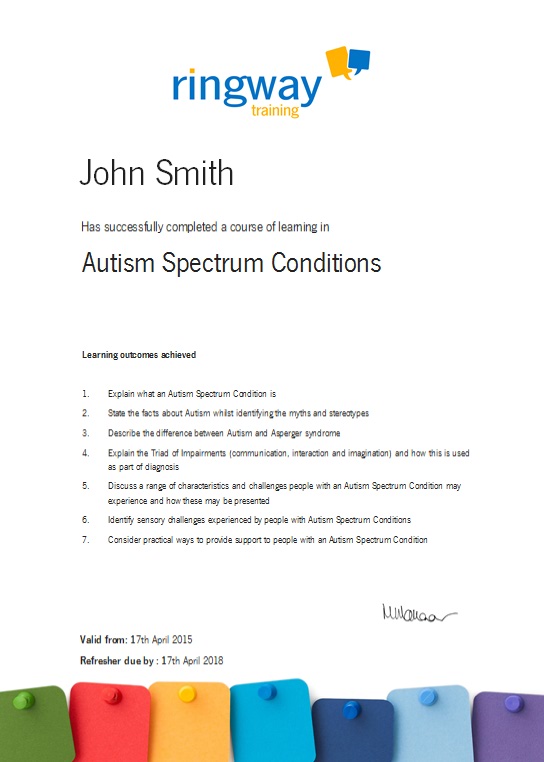
Each learner completing this course will receive a digital (PDF) certificate of learning.
Accreditation
The course contents are accredited by the Open College Network (OCN) Credit4Learning as a Level 3 course.
Choose the learning environment that works best for you: our expert-led training is offered in two convenient formats - remote tutor led online or in person face to face.
Flexible start and finish times to suit you. Contact us for available dates.
The course contents are accredited by the Open College Network (OCN) Credit4Learning as a Level 3 course.
Get a Price or more information...
Drop us a few details and we’ll send over an all-inclusive price.Just so you know, there’s no sales team here waiting and we won't add you to any marketing lists. You’ll get a quick direct reply from one of us.
Clear pricing
We ask for location (for face to face training) and approximate numbers because we include any expenses in the quotes we give so you get one clear price - no surprise added extras
More Information?
Want to dig into the details first or interested in a number of courses? No problem! Drop us a message or phone us.
Contact UsCourse FAQs