Course Summary
Oppositional behaviour in children and young people is often misunderstood as simple disrespect, manipulation, or deliberate rule-breaking. However, for young people experiencing Oppositional Defiant Disorder (ODD) or trauma-linked defiance, resistant behaviour is frequently a survival mechanism—a protective reaction to feeling unsafe, overwhelmed, or out of control. Effective ODD training helps practitioners move past reactive discipline toward evidence-based, trauma-informed interventions that reduce challenging behaviour in care and classroom environments.
This accredited level 3 course cuts through the noise to give frontline staff in social care, residential care, foster care agencies, and education settings a clear, compassionate, and highly practical toolkit. You will explore how ODD overlaps with—and differs from—neurodevelopmental conditions like ADHD, autism, FASD, and Pathological Demand Avoidance (PDA). By shifting from a punitive mindset to a trauma-informed, relational approach, you will discover how small changes in your tone, pacing, body language, and physical proximity can dramatically lower conflict, reduce placement breakdowns, and prevent explosive escalations.
Practical De-Escalation & Support Strategies for Frontline Staff
Understanding the root causes of defiance is only half the battle; knowing how to respond when a child is dysregulated is what makes the real difference. This course equips you to:
- Identify Hidden Triggers: Learn to spot subtle escalation patterns, power imbalances, and environmental stressors before a full behavioural episode occurs.
- Implement Co-Regulation Techniques: Master non-threatening, low-pressure communication strategies, sensory grounding techniques, and calm responses that lower a child's perception of threat.
- Develop Effective Support Plans: Build strengths-based behaviour support plans that prioritise relational safety, shared control, and flexible negotiation over rigid control.
- Master Relational Repair: Learn how to handle challenging episodes effectively and rebuild trust and containment once the child has returned to a calm state.
- Collaborate Across Agencies: Strengthen your multi-agency working with CAMHS, schools, and families to ensure consistent, wrap-around support for every child.
Course Learning Outcomes
Review the learning objectives below. Expand each aim to view the detailed criteria this course covers.
- 1.1Describe the meaning of Oppositional Defiant Disorder (ODD) and how it differs from trauma‐linked defiance, deliberate rule‐breaking or conduct disorder.
- 1.2Explain how oppositional behaviour in ODD and trauma‐linked defiance can be a survival response linked to fear, shame, threat perception or loss of control.
- 1.3Describe how defiance may present through refusal, avoidance, argument, withdrawal, shutdown or escalation.
- 1.4Explain how developmental stage, trauma history, neurodiversity and environment influence oppositional behaviour in ODD and trauma‐linked defiance.
- 1.5Analyse how oppositional behaviour may be misinterpreted as disrespect, manipulation or "testing limits".
- 1.6Describe how ODD and trauma‐linked defiance impact relationships, placement stability, education and wellbeing.
- 2.1Explain possible causes of oppositional behaviour, including trauma, ACEs, attachment disruption, shame, sensory overload and emotional dysregulation.
- 2.2Describe common triggers for oppositional behaviour, including unpredictability, transitions, perceived threat, power imbalance, demands and boundary setting.
- 2.3Explain how neurodevelopmental conditions (autism, ADHD, PDA, FASD) influence oppositional responses and may overlap with or mimic ODD.
- 2.4Describe how identity‐based stressors (LGBTQ+, racism, disability, bullying) may increase vulnerability to oppositional behaviour.
- 2.5Analyse how family dynamics, parental conflict, peer influence and environmental stressors contribute to oppositional behaviour.
- 2.6Explain how professional curiosity helps identify hidden or subtle escalation patterns.
- 3.1Describe trauma‐informed principles (safety, trust, choice, collaboration, empowerment) and how they apply to ODD and trauma‐linked oppositional behaviour.
- 3.2Explain how to reduce shame, fear and perceived threat through relational safety and attuned communication.
- 3.3Describe ways to support emotional regulation, including grounding, co‐regulation, sensory strategies and predictable routines.
- 3.4Explain how to respond to oppositional behaviour using calm, non‐threatening, non‐shaming approaches that reduce escalation.
- 3.5Describe how to use flexibility, negotiation, shared control and collaborative problem‐solving to reduce oppositional responses.
- 3.6Analyse how staff responses, tone, pacing, proximity and expectations influence defiance and escalation.
- 4.1Describe ways to assess triggers, patterns and protective factors relating to oppositional behaviour.
- 4.2Explain how to develop or contribute to behaviour‐support plans that include regulation strategies, communication preferences and low‐pressure approaches.
- 4.3Describe how to support young people during oppositional episodes, including emotional containment, de‐escalation and relational repair.
- 4.4Explain how to work collaboratively with families, schools, mental‐health services and multi‐agency partners.
- 4.5Describe appropriate signposting options, including CAMHS, youth support, behavioural programmes and specialist interventions.
- 4.6Evaluate how strengths‐based, person‐centred and culturally sensitive approaches reduce oppositional behaviour and promote long‐term resilience.
- 4.7Describe how reflective practice, supervision and team communication support consistent and safe responses to ODD and trauma‐linked defiance.
Who is this course for?
This oppositional defiant disorder training course is designed for social care professionals, residential support workers, foster carers, and education staff working with children and young people demonstrating challenging or oppositional behaviour.
Duration
1 day course - we can be flexible on start and finish times to suit your needs such as school run friendly times or twilight sessions.
Availability
This ODD course is offered in two delivery formats:
- Remote Online: Led by a live tutor via Zoom or Microsoft Teams, allowing participants to join remotely. (Also known as virtual classroom training)
- Face-to-Face: Delivered in person at your location or a venue you arrange. (Also referred to as on-site training)
View a comparison of Remote and in-person face to face training .
Complete our quick enquiry form for a price and available dates.
Certification
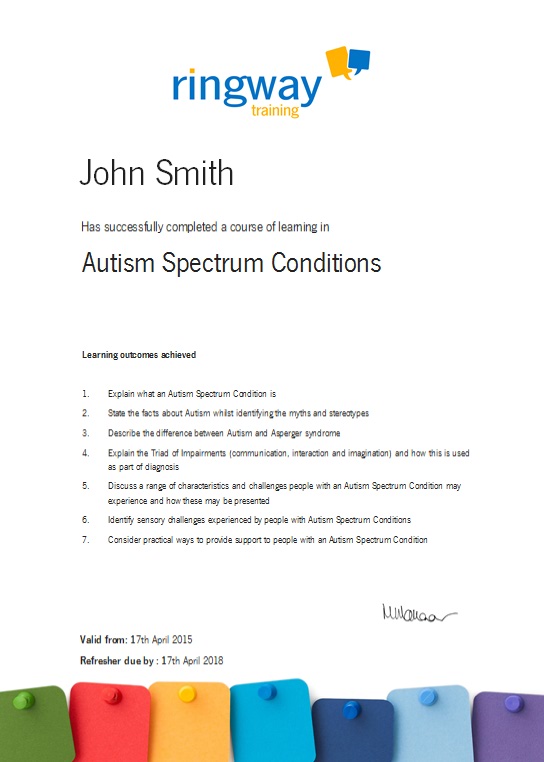
Each learner completing this course will receive a digital (PDF) certificate of learning.
Accreditation
The course contents are accredited by the Open College Network (OCN) Credit4Learning as a Level 3 course.
Choose the learning environment that works best for you: our expert-led training is offered in two convenient formats - remote tutor led online or in person face to face.
Flexible start and finish times to suit you. Contact us for available dates.
The course contents are accredited by the Open College Network (OCN) Credit4Learning as a Level 3 course.
Get a Price or more information...
Drop us a few details and we’ll send over an all-inclusive price.Just so you know, there’s no sales team here waiting and we won't add you to any marketing lists. You’ll get a quick direct reply from one of us.
Clear pricing
We ask for location (for face to face training) and approximate numbers because we include any expenses in the quotes we give so you get one clear price - no surprise added extras
More Information?
Want to dig into the details first or interested in a number of courses? No problem! Drop us a message or phone us.
Contact UsCourse FAQs