Course Summary
Our Positive Behaviour Support (PBS) training is designed for professionals who want to move beyond traditional "command and control" methods. At Level 3, this course challenges you to look beneath the surface of a child's actions to see behaviour as a form of communication. We focus heavily on the "relational" side of support—understanding how your own tone, body language, and stress levels directly impact the children you work with.
- Understanding Context: Analyse how trauma, attachment history, and sensory needs influence a child's world.
- The Power of Self-Regulation: Discover how your own emotional resilience and "co-regulation" are your most effective tools for support.
- Proactive Strategies: Learn how to adjust environments and use "attunement" to stop crises before they start.
- Planning & Ethics: Master the essentials of PBS planning and legal frameworks, ensuring every action is child-centred and rights-based.
Why Relational Positive Behaviour Support Matters for Your Everyday Work
By adopting a strengths-based approach, you shift the focus from "fixing" a problem to supporting a person. This course provides a deep dive into de-escalation techniques like space provision and redirection, ensuring you have a toolkit of non-physical interventions that maintain safety while preserving the dignity of the child. You will also learn the vital role of post-incident reflection, helping both staff and children recover and learn from difficult moments in a supportive way.
Course Learning Outcomes
Review the learning objectives below. Expand each aim to view the detailed criteria this course covers.
- 1.1Describe the term ‘behaviour that challenges’ and analyse why this description varies across settings, individuals and contexts.
- 1.2Explain how children's behaviours can be influenced by unmet needs, communication differences, neurodivergence, trauma, attachment history, and environmental factors.
- 1.3Evaluate the difference between *behaviour as communication* and behaviour as a deliberate action, including common misinterpretations.
- 1.4Describe the concept of conflict within behaviour support and explain how conflict escalates when needs are not understood.
- 2.1Explain and evaluate how adults’ emotional regulation, tone, language, body language, communication style and relational approaches influence children’s behaviour.
- 2.2Analyse how stress, fatigue and organisational pressures affect staff responses to challenging situations.
- 2.3Describe strategies for recognising and managing personal and team stress, including reflective practice, supportive supervision, and emotional resilience methods.
- 2.4Evaluate the role of co‐regulation and modelling positive behaviour as core elements of effective behaviour support.
- 3.1Explain why children may display specific behaviours, including links to trauma, attachment disruptions, SEND, sensory needs and previous experiences of instability or loss.
- 3.2Analyse how proactive strategies (predictability, structure, connection, attunement, emotional literacy, choice‐making, motivational approaches) reduce the likelihood of escalation.
- 3.3Describe common ‘triggers’ and ‘hotspots’ and evaluate methods for reducing their impact through planning, environment adjustment and relational safety.
- 3.4Explain the importance of empathetic communication and relationship‐based approaches, including attunement, validation and trust‐building.
- 3.5Describe the impact of positive reinforcement, strengths‐based language, belonging, identity, and self‐esteem on behaviour and engagement.
- 3.6Evaluate de‐escalation approaches including calm communication, space provision, de‐personalisation, redirection, and supportive presence (without physical intervention).
- 4.1Describe the essential information required for behaviour support planning (patterns, triggers, needs, risk factors, strengths, preferred strategies).
- 4.2Explain and evaluate the principle that ‘all behaviour has a positive intent’ and how this informs assessment and planning.
- 4.3Analyse key components of an effective Positive Behaviour Support Plan (PBS), including proactive, active and recovery strategies.
- 4.4Compare a range of behaviour‐support models used across the sector and evaluate their advantages and limitations (e.g., tri- phase models, restorative approaches, “Ignore–Divert– Confront”).
- 4.5Describe legal and regulatory frameworks relevant to behaviour support, such as safeguarding duties, reasonable expectations of supervision, children’s rights, standards for residential/education settings, and the requirements for non‐harmful practice (no physical intervention).
- 4.6Explain how to record, report and evaluate incidents in line with legislation, organisational policy and child‐centred practice.
- 4.7Describe why post‐incident reflection and debriefing are essential for children and staff, and how they support learning, emotional recovery and improved practice.
Who is this course for?
This positive behaviour support training is ideal for residential care workers, teaching assistants, and support staff in education or social care who work with children displaying complex or challenging behaviours. It’s perfect for those wanting to deepen their expertise in empathy-led, non-physical intervention strategies.
Duration
1 day course - we can be flexible on start and finish times to suit your needs such as school run friendly times or twilight sessions.
Availability
This positive behaviour support course is offered in two delivery formats:
- Remote Online: Led by a live tutor via Zoom or Microsoft Teams, allowing participants to join remotely. (Also known as virtual classroom training)
- Face-to-Face: Delivered in person at your location or a venue you arrange. (Also referred to as on-site training)
View a comparison of Remote and in-person face to face training .
Complete our quick enquiry form for a price and available dates.
Certification
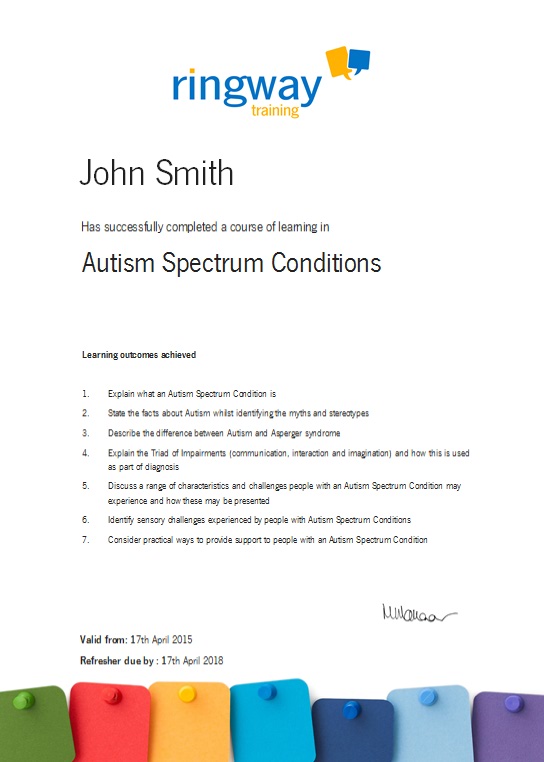
Each learner completing this course will receive a digital (PDF) certificate of learning.
Accreditation
The course contents are accredited by the Open College Network (OCN) Credit4Learning as a Level 3 course.
Choose the learning environment that works best for you: our expert-led training is offered in two convenient formats - remote tutor led online or in person face to face.
Flexible start and finish times to suit you. Contact us for available dates.
The course contents are accredited by the Open College Network (OCN) Credit4Learning as a Level 3 course.
Get a Price or more information...
Drop us a few details and we’ll send over an all-inclusive price.Just so you know, there’s no sales team here waiting and we won't add you to any marketing lists. You’ll get a quick direct reply from one of us.
Clear pricing
We ask for location (for face to face training) and approximate numbers because we include any expenses in the quotes we give so you get one clear price - no surprise added extras
More Information?
Want to dig into the details first or interested in a number of courses? No problem! Drop us a message or phone us.
Contact UsCourse FAQs