Course Summary
This course offers an in-depth exploration of the Appropriate Adult (AA) role, focusing on the delivery of legal protection and safeguarding for vulnerable individuals within the criminal justice system. Participants will journey from the statutory origins of the PACE Act to the practicalities of trauma-informed support in high-pressure custody environments.
What You Will Learn
- The Legal Framework: Master the principles of the Police and Criminal Evidence Act (1984) and the latest PACE Code C updates that govern the rights of detainees.
- Role & Boundaries: Understand the core purpose of an Appropriate Adult, distinguishing your responsibilities from legal counsel and identifying the limits of the role.
- Behavioural Insights: Explore the social, psychological, and developmental factors that influence behavior, including how neurodiversity and trauma manifest in custody.
- Rights & Advocacy: Confirm the specific rights of children and vulnerable adults during interviews, searches, and forensic sampling to ensure procedural fairness.
- Resilience & Practice: Develop essential skills in reflective practice, information sharing, and managing the emotional load inherent in the criminal justice process.
Bridging Legal Advocacy and Trauma-Informed Safeguarding
Beyond legal compliance, this course delves into the complex intersections of mental health, vulnerability, and the physical impact of detention. You will examine how to adapt support methods to meet individual needs—ensuring that communication is accessible and that neurodiversity-affirming approaches are prioritized. By evaluating the transition from detention to release, learners will understand how to implement robust safeguarding measures for a young person's return home. We emphasize the importance of structured debriefing and professional resilience, empowering you to balance the demands of the justice system with the dignity and wellbeing of the individual in your care.
Course Learning Outcomes
Review the learning objectives below. Expand each aim to view the detailed criteria this course covers.
- 1.1Describe the role and core purpose of an Appropriate Adult within safeguarding and criminal justice processes.
- 1.2Explain how Appropriate Adults contribute to the protection and wellbeing of children, young people and vulnerable adults in custody.
- 1.3Identify the circumstances in which an individual may be asked to act as an Appropriate Adult and factors that influence suitability.
- 1.4Compare the responsibilities of an Appropriate Adult when supporting a child or young person in their care and those who are not.
- 1.5Explain key responsibilities and boundaries of the Appropriate Adult role.
- 1.6Identify reasons why a person may not be suitable to act as an Appropriate Adult.
- 1.7Summarise the key principles of the Police and Criminal Evidence Act (1984) relevant to the role.
- 1.8Outline the most recent updates to the PACE Codes of Practice and their implications for practice.
- 2.1Identify different types of behaviours that may lead to police involvement or custody.
- 2.2Explain social, developmental, environmental and psychological factors that may influence behaviour.
- 2.3Describe the potential emotional, cognitive and physical impact of being detained in custody.
- 2.4Describe common reactions children and young people may display in custody, including trauma‑related and neurodivergent responses.
- 2.5Explain how acting as an Appropriate Adult may impact the individual fulfilling the role, including emotional load and professional boundaries.
- 3.1Confirm the rights of a child or young person being held in custody, including communication, legal advice, welfare and review processes.
- 3.2Confirm the rights and responsibilities of an Appropriate Adult during interviews, searches, sampling, detention, charging and legal consultations.
- 3.3Confirm the rights and responsibilities of the police when a child or young person is detained.
- 3.4Explain key safeguarding considerations when preparing for a young person’s return home or placement following release.
- 3.5Describe initial support methods that may need to be adapted to meet individual needs, including trauma‑informed and neurodiversity‑affirming approaches.
- 4.1Confirm recording, reporting and information‑sharing requirements in line with legislation, organisational policy and data protection principles.
- 4.2Evaluate the emotional and practical impact of acting as an Appropriate Adult and how this may influence wellbeing.
- 4.3Explain how undertaking the role can develop skills, confidence and professional resilience.
- 4.4Explain the importance of structured debriefing, reflective practice and supervision following involvement in custody processes.
Who is this course for?
This accredited Appropriate Adult Training course is ideal for care & social workers, youth justice practitioners, and volunteers looking to support vulnerable individuals during police procedures.
Duration
1 day course - we can be flexible on start and finish times to suit your needs such as school run friendly times or twilight sessions.
Availability
This Appropriate Adult training course is offered in two delivery formats:
- Remote Online: Led by a live tutor via Zoom or Microsoft Teams, allowing participants to join remotely. (Also known as virtual classroom training)
- Face-to-Face: Delivered in person at your location or a venue you arrange. (Also referred to as on-site training)
Upcoming Remote (Zoom) Open Course Dates
| Date | Price | Availability | Action |
|---|---|---|---|
| Tue, 10 Nov 2026 | £99.00 | Places Available | Book Places |
View a comparison of Remote and in-person face to face training .
Complete our quick enquiry form for a price and available dates.
Certification
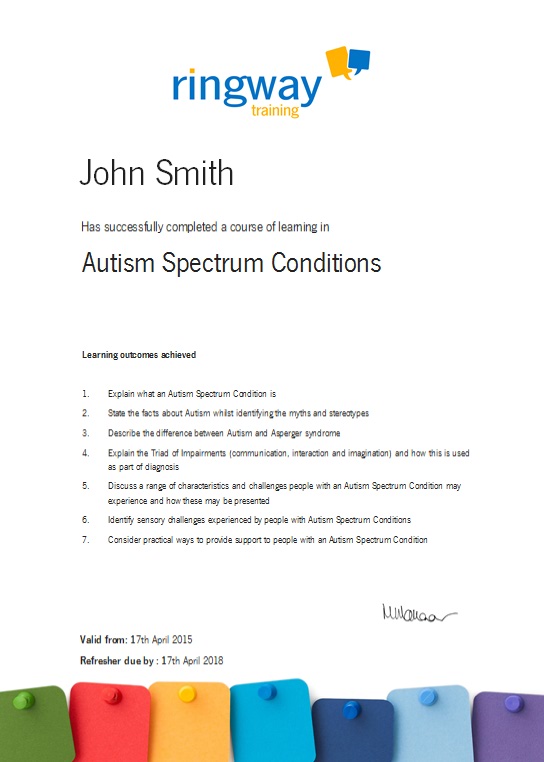
Each learner completing this course will receive a digital (PDF) certificate of learning.
Accreditation
The course contents are accredited by the Open College Network (OCN) Credit4Learning as a Level 3 course.
Choose the learning environment that works best for you: our expert-led training is offered in two convenient formats - remote tutor led online or in person face to face.
Flexible start and finish times to suit you. Contact us for available dates.
The course contents are accredited by the Open College Network (OCN) Credit4Learning as a Level 3 course.
Get a Price or more information...
Drop us a few details and we’ll send over an all-inclusive price.Just so you know, there’s no sales team here waiting and we won't add you to any marketing lists. You’ll get a quick direct reply from one of us.
Clear pricing
We ask for location (for face to face training) and approximate numbers because we include any expenses in the quotes we give so you get one clear price - no surprise added extras
More Information?
Want to dig into the details first or interested in a number of courses? No problem! Drop us a message or phone us.
Contact UsCourse FAQs