
Key Info
1 Day Course
Contact us if you require training which runs to a different timescale
Where and When
Delivered at a venue of your choice throughout the UK or by tutor led remote delivery, contact us for availability.
Accredited Course
The course content are accredited by the Open College Network (OCN) Credit4Learning.
Course Overview
Obsessive-Compulsive Disorder is a complex mental health condition that is frequently misunderstood or trivialized. This accredited OCD training course is designed to move beyond basic awareness and build practical, professional confidence.
Tailored for practitioners across social care, education, and healthcare - from those establishing their careers to experienced professionals, this course provides the tools and practical strategies required to move beyond stereotypes and deliver high-quality, person-centered support.
What You Will Learn
This comprehensive course combines the latest research with practical intervention strategies. Participants will explore:
-
Clinical Recognition: Understanding the diagnostic criteria for obsessions and compulsions and how they impact daily functioning, wellbeing, and relationships.
-
The Science of OCD: Exploring modern theories of OCD causes, moving beyond "neatness" myths to understand the neurological and psychological drivers.
-
Trauma-Informed Practice: Examining the proven links between trauma and OCD to provide safer, more empathetic support.
-
Neurodiversity-Inclusive Care: Strategies for supporting individuals where OCD co-exists with neurodivergent traits such as Autism or ADHD.
-
Practical Strategies: Learning to adapt care environments and communication styles to reduce stigma and improve long-term outcomes for clients.
Professional Impact
By completing this OCD course, staff will gain the confidence to use accurate, respectful terminology and implement evidence-based support plans. For social care providers, this training demonstrates a commitment to professional excellence and aligns with the highest standards of CQC-responsive and effective care.
Course Learning Outcomes
Below are the main topics covered in this course, expand each one to see the criteria.
- 1.1Define what OCD is
- 1.2Distinguish OCD from common stereotypes or casual misuse of the term
- 1.3Identify common signs of OCD
- 1.4Clarify the meaning of ‘obsessions’ and ‘compulsions’
- 1.5Explained the impact of OCD on daily functioning including learning, well being and relationships
- 2.1Analyse cause theories of OCD
- 2.2Explain different types of OCD
- 2.3Apply appropriate terminology to use in describing and supporting people with OCD
- 2.4Consider ways of promoting awareness among peers
- 3.1Evaluate theories of OCD and trauma
- 3.2Confirm the meaning of neurodivergence and how this includes OCD
- 3.3Identify ways to adapt approaches to better support individuals with OCD
- 3.4Explain ways to apply trauma-informed strategies to support people with OCD whilst ensuring responses are sensitive and inclusive
- 4.1Describe when and how to escalate concerns of a person’s wellbeing appropriately
- 4.2Confirm signposting to appropriate support services and safeguarding pathways when needed
Accreditation
The course content are accredited by the Open College Network (OCN) Credit4Learning.
Certification
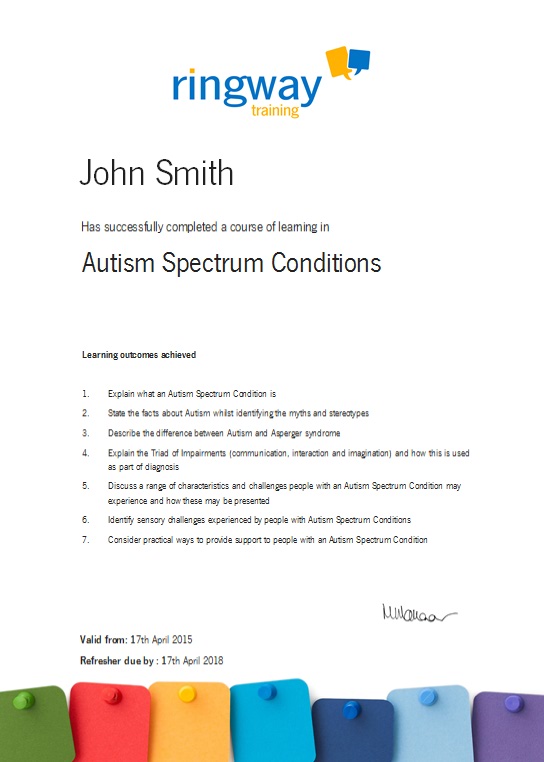
Each learner completing this course will receive a digital (PDF) accredited Level 3 certificate of learning.
Additional Information
Training course duration
1 Day (please contact us if you require training which runs to a different timescale).Availability of this training course
This Obsessive Compulsive Disorder (OCD) Training Courseis available as in-house training at a venue of your own choice throughout the UK. Alternatively, also available remotely via a tutor led course over Zoom or Microsoft Teams.Audience for this course
This Obsessive Compulsive Disorder (OCD) course is designed for professionals working with children and young people including support teams, education professionals and foster carers.QCF Units
This OCD training course is designed to meet the standards outlined in the new Children's Homes (England) Regulations which were introduced on 1st April 2015 and can contribute to outcomes of QCF units including the National Diploma for the Children and Young People's Workforce and the National Diploma in Health and Social Care (Adults).Other courses you might be interested in
Example Certificate
Get a Price or more information...
Just fill in this quick form and we will email you an all inclusive price, don't worry we will never add you to any marketing lists - promise. If you want more information first thats great - just get in touch
Clear pricing
We ask for location and approximate numbers because we include any expenses in the quotes we give so you get one clear price
More Information?
If you have any questions, want more information or interested in a series of courses please contact us
Contact Us